
Affiliate disclosure: Some links in this article are referral links. If you sign up or purchase through them, I may earn a small commission at no extra cost to you. I only link to products I personally use and recommend. Full disclosure.
The Complete Christian Guide to the TFSA in Canada (2026)

The biggest financial mistake most Canadian Christians make with the TFSA has nothing to do with contribution limits or investment picks. It is the name itself. "Tax-Free Savings Account" sounds like a place to park cash. So that is what people do. They open one at their bank, drop in a few hundred dollars, earn 2% interest, and think they are using it.
They are not.
The TFSA is not a savings account. It is a tax-free investment vehicle, and the difference between those two things, over twenty or thirty years, is the difference between tens of thousands of dollars and hundreds of thousands. The Canadian government built one of the most generous tax shelters in the developed world, and most people treat it like a sock drawer for emergency cash.
If no one has told you this plainly before, I am telling you now: the TFSA is probably the single most important financial account you will ever open. And if all you have done is park cash in one, you are leaving an enormous amount of money on the table.
Quick Answer: The TFSA lets any Canadian 18 or older invest up to $7,000 per year (2026 limit) in stocks, ETFs, bonds, or GICs, and every dollar of growth is yours, tax-free, forever. If you have never contributed and have been eligible since 2009, you have $109,000 in total room. Open a TFSA at Wealthsimple or EQ Bank, put money in, and invest it. That is the entire strategy.
Understand your tax picture first: The Wise and Faithful Tax Calculator shows your marginal rate and RRSP savings — useful for deciding how to split contributions between TFSA and RRSP.
In this article:
- What the TFSA Actually Is (And What Most People Get Wrong)
- The 2026 Numbers You Need to Know
- What You Can Hold Inside a TFSA
- Withdrawals, Recontributions, and the Mistake That Costs People Money
- How to Open and Fund a TFSA Today
- The TFSA and Faithful Stewardship
- Final Thoughts
What the TFSA Actually Is (And What Most People Get Wrong)
The TFSA was introduced by the Canadian government in 2009. The concept is simple: you contribute after-tax dollars (money you have already paid income tax on), and from that point forward, everything that happens inside the account is invisible to the CRA. Interest, dividends, capital gains, none of it is taxed. Not while it grows. Not when you withdraw it. Not ever.
Compare that to a regular investment account, where the CRA takes a cut of your gains every year. Or an RRSP, where you get a tax break now but pay full income tax when you withdraw in retirement. The TFSA is the only registered account in Canada where the money goes in taxed and comes out free.
That is why treating it as a savings account is such a waste.
If you deposit $7,000 a year into a TFSA earning 2% in a high-interest savings account, after 20 years you will have roughly $170,000. That is fine. But if you invest that same $7,000 a year in a diversified index fund averaging 7% annual returns, after 20 years you have over $315,000. Same contribution. Same account. The difference is what you put the money into, and the fact that the $145,000 in extra growth is completely tax-free.
The TFSA is not where your money sleeps. It is where your money works hardest, because the government does not take a cent of what it earns.
Most Canadians have this backwards. They invest in taxable accounts and save in their TFSAs. Flip it. Your highest-growth investments belong inside your TFSA first. That is the account where tax-free compounding does the most good.
For a broader look at how investing fits into a Christian financial life, read Related: A Christian Beginner's Guide to Investing.
The 2026 Numbers You Need to Know
Here is what matters this year.
Annual contribution limit (2026): $7,000. This is the amount of new room the CRA adds to your account on January 1 each year. The limit has been $7,000 since 2024.
Cumulative room if you have never contributed: $109,000. If you were 18 or older in 2009 and have never put a dollar into a TFSA, you have $109,000 in total available contribution room as of January 1, 2026. That is not a typo. That room does not expire. It carries forward indefinitely.
Here is the year-by-year breakdown of annual limits since the TFSA began:
- 2009-2012: $5,000/year
- 2013-2014: $5,500/year
- 2015: $10,000
- 2016-2018: $5,500/year
- 2019-2022: $6,000/year
- 2023: $6,500
- 2024-2026: $7,000/year
Your personal room may be different. If you have contributed in the past, your available room is reduced. If you have withdrawn, some room gets added back (more on that below). The easiest way to check your exact number is to log into your CRA My Account.
Overcontribution penalty: 1% per month. If you exceed your limit, the CRA charges 1% per month on the excess amount for every month it stays in the account. This is the single most common TFSA mistake, and it is entirely avoidable if you know your room.
The bottom line: know your number. Check your CRA account. Do not guess.
What You Can Hold Inside a TFSA
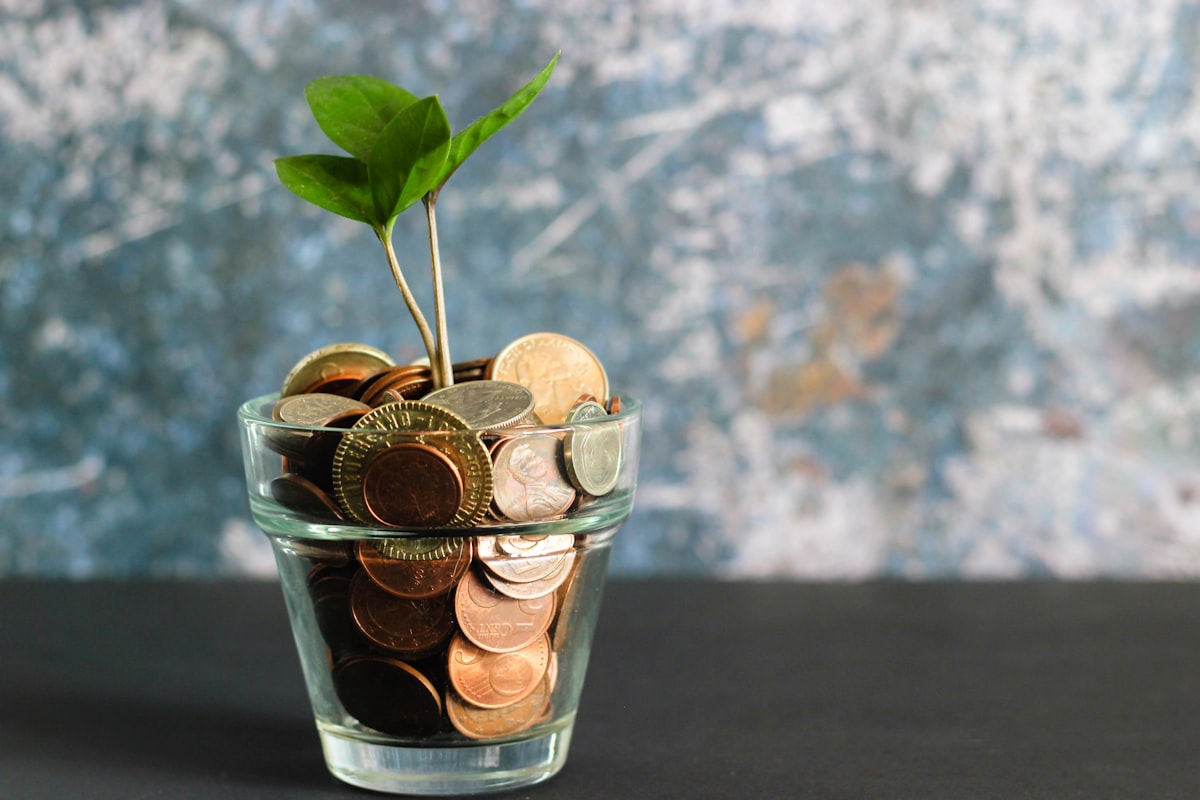
This is where the name causes the most confusion. A TFSA is a container, not a product. What you put inside it is up to you.
Qualified investments include:
Cash and high-interest savings accounts. Fine for an emergency fund. Not fine as a long-term strategy. EQ Bank offers a TFSA savings account with competitive rates if you want to park cash short-term.
GICs (Guaranteed Investment Certificates). Locked in for a term (usually 1-5 years), guaranteed return. Safe. Low growth. Appropriate for money you will need within 1-3 years.
Bonds and bond ETFs. Moderate risk, moderate return. A piece of a balanced portfolio, not usually the whole thing.
Stocks. Individual company shares. Higher risk, higher potential return. Not where beginners should start.
ETFs (Exchange-Traded Funds). This is where most people should focus. A single all-in-one ETF holds thousands of stocks across Canada, the US, and international markets. Low fees (typically 0.20-0.25% MER). Maximum diversification with minimum effort.
Mutual funds. Similar to ETFs but often with much higher fees (1.5-2.5% MER). The fee difference compounds dramatically over decades. A 2% annual fee difference on a $100,000 portfolio costs you roughly $170,000 over 30 years. I would avoid traditional mutual funds for this reason alone.
The principle is straightforward: if you will not need the money for 10+ years, invest it. If you need it within 1-3 years, a HISA or GIC inside the TFSA is reasonable. But the moment you tell yourself "I'll just keep it in savings," you are choosing to leave the TFSA's greatest advantage, tax-free growth, on the table.
For a comparison of the TFSA with other registered accounts, see Related: TFSA vs RRSP Canada 2026.
Withdrawals, Recontributions, and the Mistake That Costs People Money
The TFSA's withdrawal rules are more flexible than most people realize. But the recontribution rules have a catch that trips people up every year.
You can withdraw anytime, for any reason, with no tax consequences. Unlike the RRSP, where early withdrawals trigger income tax and permanently lose contribution room, TFSA withdrawals are clean. Need money for a car repair? Pull it out. No tax. No penalty. No paperwork.
Withdrawals do not affect government benefits. TFSA withdrawals do not count as income for purposes of the Canada Child Benefit, Old Age Security, Guaranteed Income Supplement, or any other income-tested federal benefit. This is enormous for retirees and parents.
Here is the catch: recontribution room comes back on January 1 of the following year, not immediately.
This is the mistake. You withdraw $10,000 in June. You think, "Great, I'll put it back in September." But your contribution room did not increase when you withdrew. It will increase on January 1 of next year. If you recontribute in the same calendar year without enough existing room, you have overcontributed, and the CRA will charge you 1% per month on the excess.

I have seen people make this mistake with real money. It is not a small penalty if the amount is large and you do not catch it quickly.
The rule to remember: withdraw freely, but wait until January 1 of the next year to put it back. Or check your CRA My Account to confirm you have enough existing room before recontributing in the same year.
How to Open and Fund a TFSA Today
If you do not have a TFSA, or if you have one sitting in cash at a big bank earning close to nothing, here is what to do.
Open a TFSA with a low-cost platform. Wealthsimple is the simplest option for most Canadians. You can open the account in under ten minutes, there is no minimum balance, and they offer both a managed portfolio (they choose the investments for you) and a self-directed option (you choose). EQ Bank is strong if you want a TFSA savings account for short-term cash. I use Wealthsimple for investing and have used EQ Bank for higher-interest savings.
Check your contribution room. Log into your CRA My Account. Do not guess. Know your exact available room before you contribute anything.
Set up an automatic contribution. Even $100 per paycheque. The amount matters less than the consistency. Automate it so you never have to decide. As Ramit Sethi puts it in I Will Teach You to Be Rich: make the decision once, then let the system run.
Invest it. If you are using Wealthsimple's managed portfolio, they handle this for you based on your risk profile. If you are self-directed, buy a single all-in-one ETF. One fund. Done. Revisit quarterly, not daily.
Increase your contributions when your income grows. Got a raise? Increase your automatic TFSA contribution by half the raise amount. You will not miss money you never had.
That is the entire playbook. The financial industry profits from making this feel complex. It is not complex. It is five steps and fifteen minutes.
The bottom line: open it, fund it, invest it, automate it, forget it.
The TFSA and Faithful Stewardship
I want to be careful here, because I do not want to baptize a tax-sheltered investment account. Opening a TFSA is not a spiritual act. The CRA is not the Kingdom.
But the principle underneath it is.
Proverbs 21:20 says: "The wise store up choice food and olive oil, but fools gulp theirs down." That verse is not about TFSAs, obviously. But it is about the habit of setting something aside instead of consuming everything as it comes in. As GotQuestions notes, Scripture consistently commends saving for known future needs, not out of fear or greed, but out of wisdom. The ant stores in summer. The wise man puts something away. The TFSA is simply the best tool the Canadian government has given you to do that.
I have watched men in my church sit on years of unused contribution room because they thought investing was for wealthier people, or because the amount they could contribute felt embarrassingly small, or because they were so buried in conflicting financial advice that doing nothing felt safer than doing something wrong.
That last one is the most common. And I say this as a pastor who has been there: paralysis is not prudence. The man who waits until he fully understands every investment option before putting a dollar into his TFSA is the man who never starts. Use wisdom, pray, seek guidance, and then act. Proverbs 3:5-6 does not say "understand everything first." It says trust.
The Gospel Coalition puts it well: saving demonstrates the importance of stewarding God's gifts. It honours Him because it rightly values money as a gift, not a god. The TFSA is one of the most efficient tools available to Canadian Christians for exactly that purpose.
My wife and I max our TFSAs before we invest in anything else. It is the first place our investment dollars go after our tithe, our essential expenses, and our emergency fund. Not because it is the most exciting account. Because it is the most efficient. And stewardship, at its core, is not about excitement. It is about faithfulness with what you have been given.
For the full biblical framework behind how we think about money, start with Related: What the Bible Actually Says About Money. And if the reason you have not started is debt, not confusion, read Related: A Biblical Roadmap to Becoming Debt-Free first.
Final Thoughts
The TFSA is not glamorous. It does not make for interesting dinner conversation. Nobody has ever gone viral on social media for maxing out their tax-free savings account.
But the man who opens a TFSA at 25, contributes consistently, invests in a diversified index fund, and leaves it alone for thirty years will have built something remarkable by the time he is 55. Not because he is a financial genius. Because he started, stayed consistent, and let the most powerful force in personal finance, compound interest, do the work inside an account where the government cannot touch the gains.
Morgan Housel writes in The Psychology of Money that the real key to building wealth is not brilliance or timing. It is time. Every year you leave that TFSA room unused is a year of tax-free compounding you do not get back.
You do not need to understand everything about investing to open a TFSA. You do not need to max it out in year one. You need to start. Check your room at CRA My Account. Open an account at Wealthsimple or EQ Bank. Put something in. Invest it. Automate it.
The third servant in Matthew 25 did not lose his master's money. He buried it. The master's anger was not about the amount. It was about the refusal to put it to work. Do not bury yours.
What is the one step you need to take this week to stop leaving your TFSA room on the table?
[FINANCIAL DISCLAIMER]
The information in this article is for educational purposes only and does not constitute financial advice. I am not a licensed financial advisor. Investment decisions should be made based on your individual circumstances, risk tolerance, and financial goals. Consider consulting a qualified financial advisor before making investment decisions. Past performance does not guarantee future results. All investing involves risk, including the possible loss of principal.