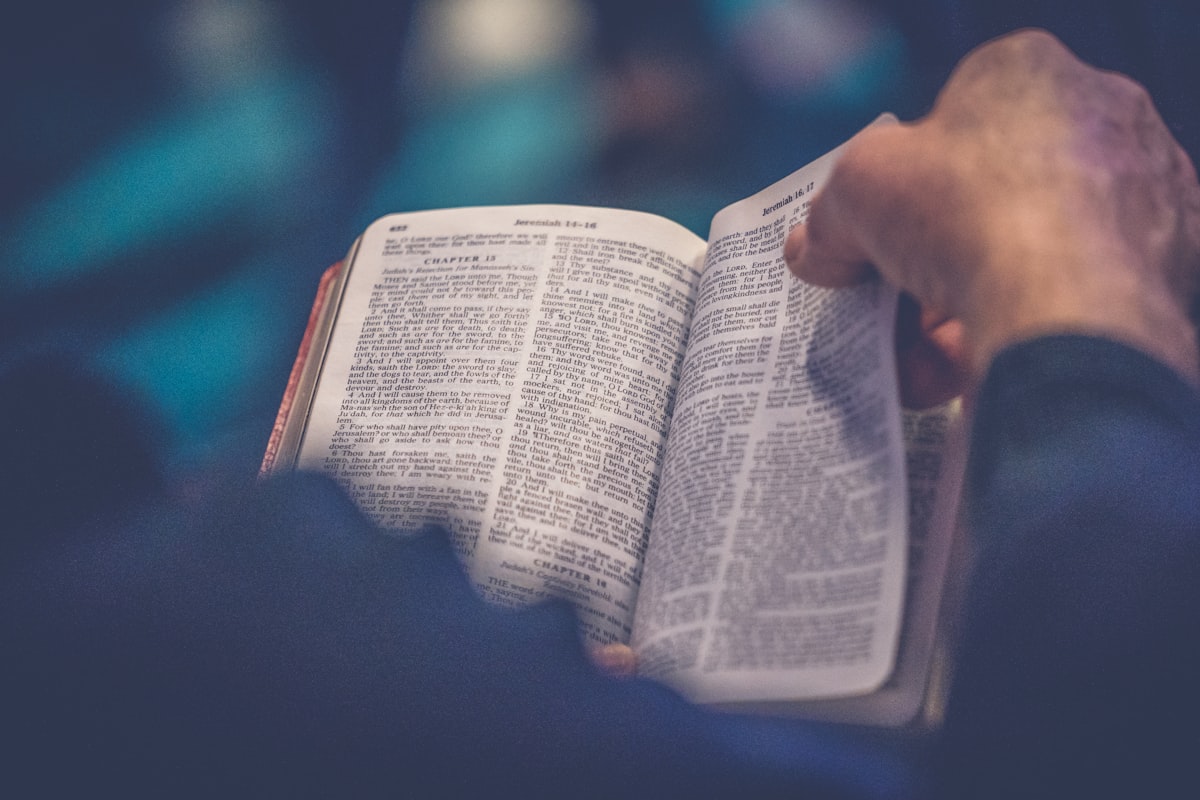
What Proverbs 22:7 Actually Means About Debt
Most people read Proverbs 22:7 as a prohibition. It isn't. And that misreading is costing you something.
If you've spent any time in Christian finance circles, you've heard this verse dropped like a gavel: "The borrower is slave to the lender." The implication is clear: debt is forbidden, debt is sin, debt is incompatible with following Jesus. End of discussion.
The problem is that's not what the verse says. And more than that, it's not how wisdom literature in the Bible works. When you treat an observation as a command, you misread the text. And when you misread the text, you either swing into legalism or you swing into dismissal. Neither helps you.
What Solomon is doing here is harder. More uncomfortable. And, in the end, more useful.
Quick Answer: Proverbs 22:7 is not a prohibition against borrowing. It is an observation about power: debt shifts agency from the borrower to the lender. The verse is a warning, not a law. Its purpose is to make you pause and feel the weight of what debt actually costs before you sign anything.
In this article:
- How Christians misread Proverbs 22:7
- What the verse is actually saying
- What debt does to a real life
- Does the Bible actually forbid debt?
- The diagnostic question that changes everything
How Christians Misread Proverbs 22:7
Proverbs 22:7 reads: "The rich rule over the poor, and the borrower is slave to the lender."
That's it. Eleven words in the second half. No command. No "therefore, thou shalt not." No explicit prohibition anywhere in the surrounding text.
Proverbs is wisdom literature, which means it operates differently than the law of Moses or the epistles of Paul. The proverbs are not legislation. They are compressed observations about how the world actually works: the kind of thing a wise father passes to his son so the son doesn't have to learn it the hard way. They describe patterns of cause and effect, of character and consequence, in a form short enough to remember at 2am when you're staring at a loan agreement.
Kevin DeYoung has written helpfully about money and possessions in Proverbs, noting that Proverbs doesn't moralize money the way people sometimes assume. It observes how money behaves, and how people tend to behave around it.
When you treat Proverbs 22:7 as a command, you actually make it weaker. You turn it into a rule that can be debated, qualified, and eventually dismissed by anyone with a reasonable exception. "Well, mortgages are different." "Well, student loans are an investment." And technically, they're not wrong, because the verse never said those things were forbidden.
What the verse actually says is far harder to argue with: this is what debt does. That's not a rule you can find an exception to. It's reality.
What the Verse Is Actually Saying
The first line, "the rich rule over the poor," is not an endorsement of wealth. It's an observation about social power. In the ancient Near East, wealth meant leverage. It meant options. The rich decided the terms; the poor accepted them or went without.
The second line applies that same dynamic to lending. When you borrow money, the person holding your note has leverage over you. They don't have to be cruel about it. They don't have to chase you. The arrangement itself shifts the power. The word translated "slave" here is eved: the same word used throughout the Hebrew Bible for a bondservant, someone whose time and labor belong to another.
That's not a metaphor being stretched for effect. In the ancient world, debt servitude was real. If you couldn't repay, you worked it off. Your freedom was genuinely mortgaged.
We don't have literal debt slavery in Canada in 2026. But the psychological and practical reality is closer than we'd like to admit. When you owe money, that money has a claim on every decision you make going forward. You can't give as freely. You can't leave a bad job as easily. You can't take a risk that would otherwise be wisdom. You can't absorb an unexpected crisis without cascading into worse debt.
The borrower is not merely inconvenienced. He is, in a real and measurable sense, less free than he was before he signed.
Statistics Canada reported that by the end of 2025, Canadian households owed $1.77 for every dollar of disposable income, a debt-to-income ratio of 177.2%. That's not ancient Israel. That's your neighbourhood.
What Debt Does to a Real Life
Here is what I see in the men I pastor. Not the debt number. That varies. It's the silence.
Men carrying debt they haven't told their wives the full extent of. Men whose financial anxiety has been running as a low-grade fever for so long they've stopped noticing it. Men who are working hard, providing for their families, showing up on Sunday, and quietly drowning. The debt isn't always catastrophic. Often it's just the accumulated weight of years of spending slightly more than they had, of not having a plan, of believing that things would sort out.
And the verse is right about what that does. The debt doesn't just sit there. It colonizes the future. Opportunities that should be exciting become frightening because they require financial flexibility. Conversations about giving become tense because the margin isn't there. Decisions that should be made with wisdom and prayer get made based on what the monthly minimum will bear.
I've been there too. Not with consumer debt, but with investment overconfidence. I went aggressive on some positions that worked at first. Early success is the most dangerous thing that can happen to you in investing, because it feels like skill when it might just be timing. I kept going. Got overconfident. Got burned. The shame of it was specific and real: I knew what careful stewardship looked like, and I had deviated from it in pursuit of something faster. There was a gap between who I was trying to be and what I had actually done.
That gap is what Proverbs 22:7 is pointing at. Not "don't borrow," but "know what you're trading."
Desiring God puts it plainly in their piece Debt Is Not a Money Problem: debt is not fundamentally an overspending problem. It is a contentment problem. The debt is just where the contentment problem shows up in the ledger.
Does the Bible Actually Forbid Debt?
This is a real question, and it deserves a real answer rather than a shrug.
No, the Bible does not issue a blanket prohibition on debt. What it does is consistently frame debt as a constraint on freedom, something to avoid when possible and exit as quickly as possible when it can't be avoided. The question it returns to isn't "did you borrow?" It's "what did the borrowing cost you, and was it worth it?"
Romans 13:8 says "Let no debt remain outstanding, except the continuing debt to love one another." Some read this as absolute. But the phrase "let no debt remain outstanding" in context is about ongoing obligation: pay what you owe, don't default on your commitments. Paul is addressing people who aren't following through, not issuing a lending policy.
Proverbs 6:1-5 warns urgently against pledging surety for another person's debt. That's a specific caution: don't co-sign loans you can't cover. Good advice that most people ignore until they regret it.
What the Bible doesn't do is prohibit borrowing. The law of Moses regulated lending rather than forbidding it. It limited interest rates, established sabbatical debt cancellation, and protected borrowers from exploitation. The assumption throughout is that lending and borrowing happen: the question is whether they're done justly and wisely.
The Gospel Coalition's piece on lies Christians tell about money is worth your time here. Scripture doesn't prohibit debt, but it consistently treats it as a form of bondage: something to avoid when possible and exit as quickly as possible when it can't be avoided.
There's a real distinction between a mortgage on a home, a car loan you can afford and will retire in three years, and carrying $18,000 in credit card debt at 22% interest. They are not morally identical.
The bottom line: the Bible doesn't call debt a sin. It calls it a constraint on freedom. And it asks you to count that cost honestly before you take it on.
The Diagnostic Question That Changes Everything
Here is the question I've learned to ask before taking on any debt, and the question I'd encourage you to sit with:
Does this debt restrict my freedom to obey God?
Not in a general sense. Specifically: will this monthly payment limit my ability to give generously? Will it keep me in a job that compromises my integrity because I can't afford to leave? Will it prevent me from responding to a clear call or opportunity because the budget is already committed? Will it make financial crisis, if it comes, worse than it needs to be?
If the honest answer is yes to any of those, Proverbs 22:7 is doing its job. The verse is a flare sent up before you sign. This is what you are trading. Know the cost before you pay it.
If the honest answer is no: if the debt is modest, purposeful, and retiring on a reasonable timeline, and it doesn't compromise your freedom to give or pivot, then the verse is not a prohibition against proceeding. It is an observation you have already weighed.
What this verse resists is the casual accumulation of debt without thought. The buy-now-pay-later drip that slowly fills the bathtub until one day you realize you can't turn it off. The lifestyle inflation that gets financed rather than earned. The avoidance of the real number because looking at it is uncomfortable. The debt doesn't care that you're uncomfortable with it. It accrues regardless.
My wife and I spent three years as building superintendents, living rent-free in exchange for about twenty hours of maintenance work per week each on top of our full-time jobs, so we could build a down payment without renting that consumed our income. Not a dramatic story. Just a season of choosing future freedom over present convenience. When we bought our home, we did it on terms that didn't enslave the next decade of our lives.
That decision was downstream of a conviction: we wanted to be free. Free to give, free to pivot, free to say yes to things that cost money we didn't have if God put them in front of us. Debt is a mortgage on that freedom. Sometimes it's worth paying. Often it isn't.
Final Thoughts
Proverbs 22:7 is not a rule. It's a mirror. Hold it up before you borrow, and look honestly at what you see.
The man who reads this verse and dismisses it because "my situation is different" has missed the point. So has the man who becomes so anxious about debt that he never takes a reasonable financial risk. Wisdom isn't a formula. It's a posture of humility before a verse that knows more about your future than you do.
If you're already carrying debt that has become a master, this is not the moment for shame. Shame isolates and paralyzes, and neither of those helps you. What helps is a clear-eyed look at the number, a plan, and the steady, quiet discipline of working back toward freedom one payment at a time.
The borrower can become debt-free. That's not a promise Proverbs 22:7 makes. But it's a reality thousands of people have lived, one unglamorous month at a time.
Discussion question: Where in your financial life are you carrying debt that has restricted your freedom more than you originally expected, and what would it take to start moving in the other direction?
Author: Dan Taylor
Site: Wise and Faithful
Published: April 9, 2026
Affiliate Disclosure
Affiliate disclosure: Some links in this article are referral links. If you sign up or purchase through them, I may earn a small commission at no extra cost to you. I only link to products I personally use and recommend. Full disclosure.